

💫 Ramplify: May Milestones
Cuttable Ships World-First AI Video, Innovation Policy MIA, xAI's Rockefeller Move

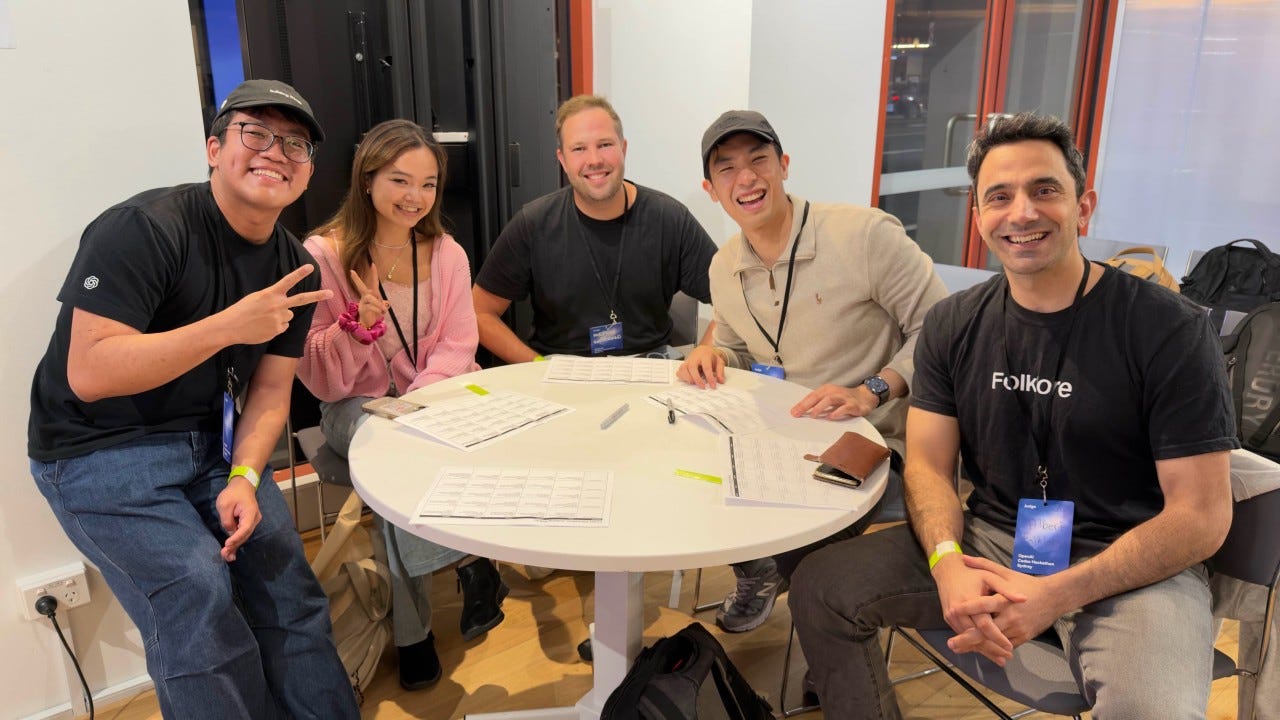
(Rampersand’s Andrew Poesaste (middle) judging the OpenAI Sydney hackathon alongside Annie Liao (Build Club), Albert Bielinko (Folklore Ventures), Joshua Choy and Gabriel Chua (OpenAI).
👋 Innovation policy — where the bloody hell are you? — by Paul Naphtali
The past two weeks have been full of opinions on the CGT changes. Most investors and founders are decrying the impact on entrepreneurs, who now face the highest tax rates on their proceeds and may leave the country. A few argue that founders don’t really relocate based on tax savings, so it’s no big deal.
These missives have largely missed the point. There will always be views on tax winners and losers, and there is clearly complexity to be worked out. The real question is different: where is the underlying strategy on innovation?
Every few months, there’s a hullabaloo about the impact of a government policy on the startup ecosystem. Taxes on unrealised gains. Changes to the acquisitions approval process. Increases to sophisticated investor thresholds. Each time, a policy designed to address an issue in one part of the system has potentially drastic impact on startups and VC. We may be the second-biggest industry in the country, but we are an afterthought when it comes to policy.
Remember the Australian Tourism ad “where the bloody hell are you?“ The premise was simple: we’ve got the beaches, the food, the outback, come on down. As a startup ecosystem, we can say the same thing to our government.
All countries are in a global race. For talent. For capital. For creativity, productivity, security, self-reliance, relevance. If AI is going to disrupt the labour market, we shouldn’t be shipping all our value offshore. But there’s a pattern in Australia of being blessed with natural resources, selling them for cents in the dollar, and then importing the value-added product back.
A coherent policy could change that. Most governments around the world have taken a strong stance on attracting the best and brightest. Israel, for all its geopolitical challenges, has had a long-term commitment to entrepreneurship and innovation, and now has more unicorns per capita than any country on earth, built on fund matching, grants, and tax incentives. Britain is in some ways even more aggressive: significant tax relief, co-investment vehicles, and dedicated founder visas. Singapore offers a 250% tax deduction for R&D. South Korea, Chile, France, and Germany have all moved in the same direction.
We do have good incentives here. The R&D Tax Incentive is decent. ESVCLP and ESIC are real and meaningful. But even those are constantly reviewed and questioned, and they don’t add up to a strategy.
This isn’t whinging. It’s not already-rich folks wanting to dodge taxes. It’s recognising that private endeavour has built this ecosystem into a genuinely positive position. We have a rapidly-growing, world-class, highly motivated talent pool. Established, value-additive investors. We are one of the fastest-growing ecosystems on the planet.
The opportunity is growing, and the reward for success is greater than it’s ever been. Conversely, the risk of being left behind has never been higher. It’s on us to make the point to government and other stakeholders why this matters. As the second-biggest industry in the country, let’s stop fighting spotfire after spotfire and start asking for what we actually need.
Three things we’d like to see:
A matched co-investment vehicle along the lines of the British Business Bank or Israel’s Yozma. Government capital, alongside private capital, is deployed at the seed and Series A stages, where the funding gap is sharpest.
A genuine founder and talent visa that competes with the UK’s Innovator Founder or Singapore’s Tech.Pass. Not a token scheme. One that actually moves the needle on attracting the best operators globally.
Broader, more stable R&D incentives that don’t get re-litigated every budget cycle. Founders can’t plan a five-year roadmap when the rules change every twelve months.
We really do have all the pieces. Wouldn’t it be great to get a bit more help? If you feel the same way, or want to challenge any of these points, get in touch.
🗞️ Tech News:
Zoom Out: Benedict Evans’ AI and Tech Macro Trend Archive
After two stories on the structural shifts inside the AI race, a useful counterweight. Benedict Evans has quietly maintained a decade-long archive of his quarterly macro decks — tracking the shift from mobile-first markets through to platform consolidation and now AI-native software and infrastructure. It’s the cleanest available record of how technology cycles actually unfold: where adoption accelerates, where incumbents lose pricing power, and where the centre of gravity moves next.
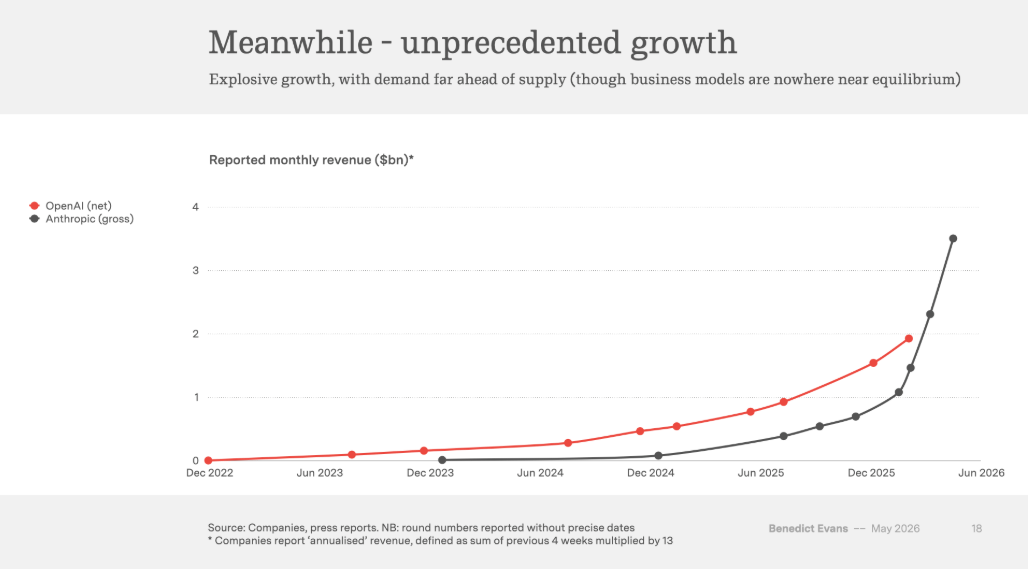
The Real Story in SpaceX’s S-1: xAI Just Outflanked OpenAI and Anthropic on Cost of Capital
What happened: SpaceX filed its S-1 on 20 May, targeting a Nasdaq listing under SPCX as early as 12 June at a $1.75T–$2T valuation, the largest IPO in history at up to $75B raised. But the headline number isn’t the real story. Buried in the filing: xAI (now a SpaceX subsidiary post-merger) has signed Anthropic to a $40B+ compute contract through 2029, paying $1.25B per month for 300MW of capacity at xAI’s Colossus 1 facility in Memphis. xAI shifts its own training workloads to Colossus 2.
Why this matters for founders: The AI race is no longer about who has the best model — it’s about who has the cheapest compute capital structure. OpenAI and Anthropic fund compute by selling equity at ever-higher valuations. xAI, soon sitting inside a public company with Starlink’s $4.4B in operating income as ballast, can issue investment-grade debt at a fraction of the cost.
The Anthropic deal is the Rockefeller move. Standard Oil didn’t just refine oil; it owned the rail rebates so competitors paid Rockefeller every time they shipped a barrel. xAI now monetises spare capacity at a higher rate than internal use would generate, and recycles the cash into Colossus 2. Anthropic, with no realistic alternative at this scale, is funding its competitor’s expansion.
Takeaway: The most valuable position in the AI stack might not be the model or the application — it’s the compute. If you’re building anything related to power, cooling, transmission, or data centre real estate in Australia, the next five years are yours. Firmus isn’t a fluke; it’s the leading edge.
The AI Hardware Stack Is Fragmenting Around the Memory Problem
What happened: Shri Kolanukuduru at Category Ventures published one of the clearest pieces yet on where the AI hardware market is actually forming. The thesis: modern GPUs spend much of LLM inference waiting on memory. Peak compute has grown faster than memory bandwidth across every GPU generation, so the gap keeps widening. That single physical constraint is now organising an entire new infrastructure stack.
Sam Altman Offers Every YC Startup $2M in OpenAI Credits for Equity
What happened: At a closed YC event last Tuesday, Sam Altman offered $2 million in OpenAI API credits to every startup in the current YC batch (~169 companies) in exchange for equity. Structured as an uncapped SAFE — the same instrument YC invented — so credits flow immediately and OpenAI’s stake gets calculated at the Series A. Altman called the experiment “tokenmaxxing”: small teams that maximise AI compute spend instead of headcount.
Why this matters for founders: This is OpenAI running the AWS 2010–2015 playbook — handing out credits to seed an entire generation of companies on its infrastructure, then collecting the rent for the next decade. The cost to OpenAI is near-zero. The cost to a founder who locks into the OpenAI API is a 1–2% structural tax on the company’s success, plus a hard switching cost when the cheaper or better model lives elsewhere in 18 months. Pick your model provider for fit and price today, not because someone handed you credits. Build your stack so swapping out the model layer takes a sprint, not a quarter. The winners won’t be the most loyal to one foundation model, they’ll have the cleanest abstraction layer underneath.
🛠️ How to Startup:
We tell founders all the time “get on the plane”. It applies to us as well.

Eight Principles for AI-First Startups in 2026
A useful synthesis is circulating from Sasha Properlee, pulling together the consistent themes across YC’s Lightcone podcast and Block’s “From Hierarchy to Intelligence” piece. Eight principles for how AI-first companies actually operate:
AI is the operating system of the company — not a tool bolted on, but the substrate everything runs on.
Closed loops everywhere — watch the output, adjust the process. Every workflow should generate signal that improves the next iteration.
Make the company readable to AI — give it the same context you’d give a senior hire. Most teams are starving their agents of context they’d happily give a human.
Software factories — humans write specs and tests, agents write code.
No human middleware — every routing layer is friction. If a human is forwarding messages, approving handoffs, or translating between systems, that’s debt.
Three roles only: IC, DRI, AI founder (per Jack Dorsey’s framing).
Token-max — high API bills replace expensive headcount.
Early-stage edge — no legacy systems to refactor in flight.
The one founders underestimate most is #5. Deleting your own org chart is harder than building AI on top of it.
Takeaway: Audit your team this week. Where is a human acting as middleware — routing, forwarding, translating? Every one of those layers is either getting deleted in the next 12 months, or your competitor’s are. Make a list.
AI Sped Up Shipping. It Didn’t Speed Up Learning.
The build half of your product loop is moving faster. The feedback half is moving at the same speed it always did. That gap is the bottleneck.
Spec drafting, prototyping, writing code, deploying it, putting the docs together after the fact — all of it faster. But after the feature ships, how long does it take to know whether real users find the new flow confusing, whether the AI-drafted copy is doing its job, whether anyone’s even opening the thing? Probably about as long as it took two years ago.
Takeaway: Measure your ship-to-signal time this week. From “feature is live” to “we have meaningful data on whether it works” — how many days? If it’s more than seven, fix that before you ship anything else. Teams compounding right now aren’t shipping faster. They’re learning faster.
Deep Tech Companies Are Built Different.
One sharp insight from Leo Polovets’ new piece on deep tech, worth actioning this week. Software founders raise equity for everything. Deep tech founders shouldn’t. There’s a financing toolkit most early-stage hardware founders don’t use: equipment financing (the lender underwrites the asset, not your traction), inventory financing, project financing, and government grants. His example: you can often get hundreds of thousands or low millions in equipment financing at pre-seed, because if you’re buying a $1M machine that resells for $900K, the lender’s risk is the machine — not you.
Takeaway: List every capital expense in your next 18 months. For each one: is this an asset a lender could repossess? If yes, you’re probably overpaying for it in equity. Call a specialist debt provider before your next equity round.
👕 VC in Australia/New Zealand:
Innovation Victoria Replaces LaunchVic and Breakthrough Victoria
Victoria has named the successor to LaunchVic and Breakthrough Victoria: Innovation Victoria, a one-stop agency absorbing both LaunchVic’s grant programs and Breakthrough Victoria’s investment mandate into a single body. Breakthrough Victoria CEO Rod Bristow will lead it. LaunchVic’s Kate Cornick has departed for the Tech Council of Australia. The chair and board are expected to be in place in the second half of 2026. The move follows an independent review of Victorian public sector spending that recommended the state “consolidate and scale back its industry support activities.” Current LaunchVic grants will continue as planned through the transition.
Takeaway: Two agencies into one is rarely a strict improvement, early-stage grant programs tend to be the first thing optimised away when an institution shifts toward “investment-grade” decision-making. Victorian founders relying on LaunchVic-style programs should engage with Innovation Victoria’s transition team now, while the operating model is still being designed.
🤩 Portfolio News
Cuttable Ships Shoots — and the Founder Wrote Much of the Code
Cuttable has launched Shoots Video, an AI video ad generator built around a brand’s specific product, customer profile, and visual language. Tell it what you want — a UGC clip, a high-production commercial, a product flatlay, a customer-in-context shot — and it generates the ad. Brands publish straight to Facebook, Instagram, and TikTok. The launch line that matters: most AI video is “complete slop” because it’s off-brand and looks nothing like the actual product. Cuttable’s bet is that brand-specific generation, not generic stock, is where AI video actually earns its place in a customer acquisition stack.
The detail worth pausing on: founder Sam Kroonenburg coded much of it himself. Sam previously sold A Cloud Guru for $2B and didn’t need to be in the codebase. He chose to be. This is the same pattern we covered last month in the Anthropic engineering story — senior operators with deep taste shipping product directly because AI tooling makes it possible to skip the layers of middle management that used to sit between the founder’s instinct and the working code.
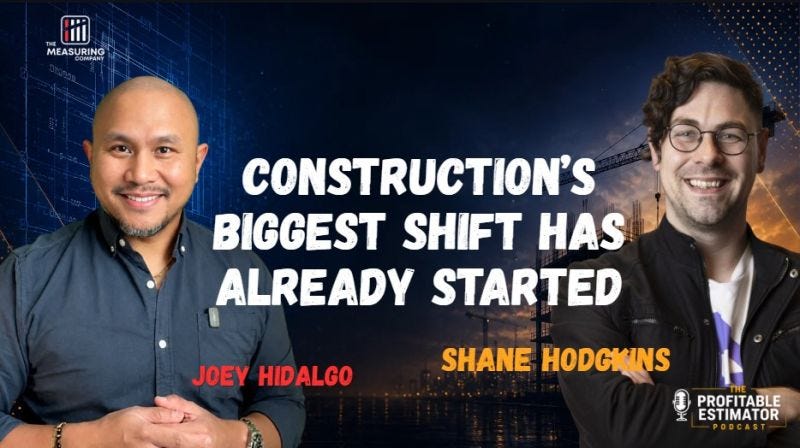
Matrak’s Shane Hodgkins on AI in Construction — and the Birth of Matrak Connect
Matrak CEO Shane Hodgkins sat down with Joey Hidalgo to talk through the realities of tech adoption in construction — an industry that’s been notoriously hard to digitise — and how AI is rewiring what “normal” looks like on site. The big reveal: Matrak Connect, the company’s new agentic AI workflow system, is already coordinating live commercial projects today. Not in a sandbox, not in a pilot — running real builds.
Quantum Brilliance’s Mark Luo on Making Quantum Useful Outside the Lab
Quantum Brilliance CEO Mark Luo sat down with Asma Adhimi at eeNews Europe to walk through the strategic choices behind the company’s room-temperature, diamond-based quantum systems — and why they’re designed to integrate into existing computing infrastructure rather than replace it. Mark lays out a pragmatic adoption path: quantum sensing drives early, high-volume deployments first, with quantum computing following as the ecosystem matures.
It’s a sharp counterpoint to the dominant industry narrative that says quantum is five years from changing everything. The deep tech answer is usually less glamorous and more useful: pick the right modality, solve manufacturability, build the ecosystem partnerships, then let the bigger applications follow.
💼 Portfolio Job Board
Principal Solution Architect at Skedulo
Location & type: San Francisco, California (Remote), full-time
What they do: Skedulo builds cloud-based software that lets companies in any industry schedule, manage, engage, and analyse their deskless workforce.
What you’ll do: Partner with Sales to qualify opportunities and lead prospect workshops, designing platform-based solutions that solve customer business problems and drive long-term value. Own technical architecture, SOWs and reusable extensions end-to-end.
Manager, Solutions Engineering at PredictHQ
Location & type: New York, USA, full-time
What they do: PredictHQ is a demand intelligence company providing AI-powered event data to help businesses forecast demand fluctuations caused by real-world events.
What you’ll do: Lead a team of Solutions Engineers across the full technical customer journey — building the frameworks, coaching rhythms and standards that let great SEs scale. Step in as technical lead on complex enterprise accounts, partnering with the CRO and CTO to keep commercial and technical aligned, and feed field learnings back into the roadmap.
Location & type: Surry Hills, NSW, full-time
What they do: Hatch is a careers platform transforming how people find work that fits them, using values and skills-based matching to connect job seekers with leading companies.
What you’ll do: Own the Hatch brand and marketing engine across B2B and B2C, leading go-to-market for major product launches to grow employer and candidate sign-ups. Build brand awareness among Australian employers and make Hatch the go-to destination for young Australians looking for work.
Do you have a job you’d like us to promote? Add it to Hatch and share the link with us.
See all jobs across the Rampersand Portfolio.
🌏 Rampersand Travel Diary:
Taryn is in Sydney 26–29 May, then Melbourne 1–4 June.
Andrew is in Melbourne 1–3 June.
🎉 Upcoming Events
📍 Sydney — May 25–27, 2026
Restoke at Food & Hospitality Week
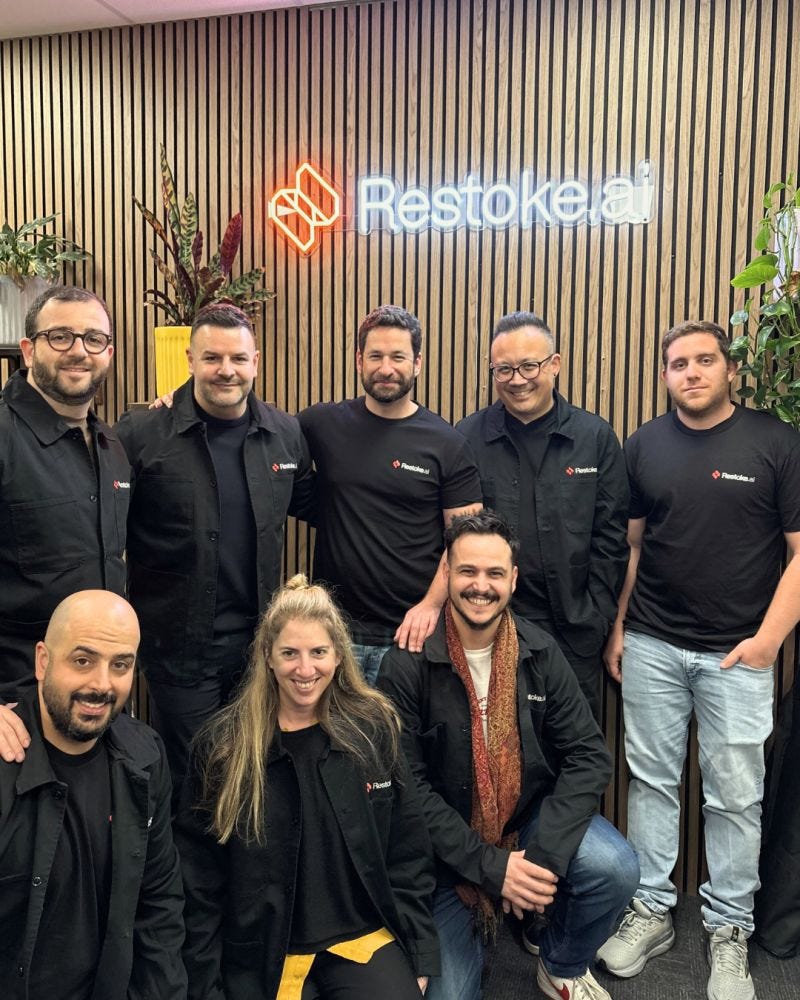
Rampersand portfolio company Restoke is at ICC Sydney this week for Food & Hospitality Week, joining thousands of operators, chefs and industry folk across three days. If you’re going, find the crew in black — they want to talk margins, back-of-house, and where AI is actually shifting hospitality operations. Catch them across all three days. 🔗 Event details.
📍 San Diego — May 31 – June 4, 2026
Mass Dynamics at ASMS 2026 — Booth #622
Rampersand portfolio company Mass Dynamics is heading to ASMS 2026 — proteomics’ flagship industry gathering — with a live product showing built around a sharp thesis: omics data has run through scattered files, static plots, and disconnected tools for too long, and AI is accelerating the work faster than the systems built to hold it can keep up. Mass Dynamics is building the connected, reproducible, agent-ready data layer for the era where humans and AI agents work side by side on scientific data. Proteomics today, more omics by design.
The team in San Diego: Paula Burton, Mark Condina, Andrew Webb, and Giuseppe Infusini. If you’re in proteomics, biotech, or pharma R&D and you’ll be at ASMS, find them at Booth #622.
Thanks for being part of the Rampersand Community! You can stay updated with even more news and info on our LinkedIn and X/Twitter pages.